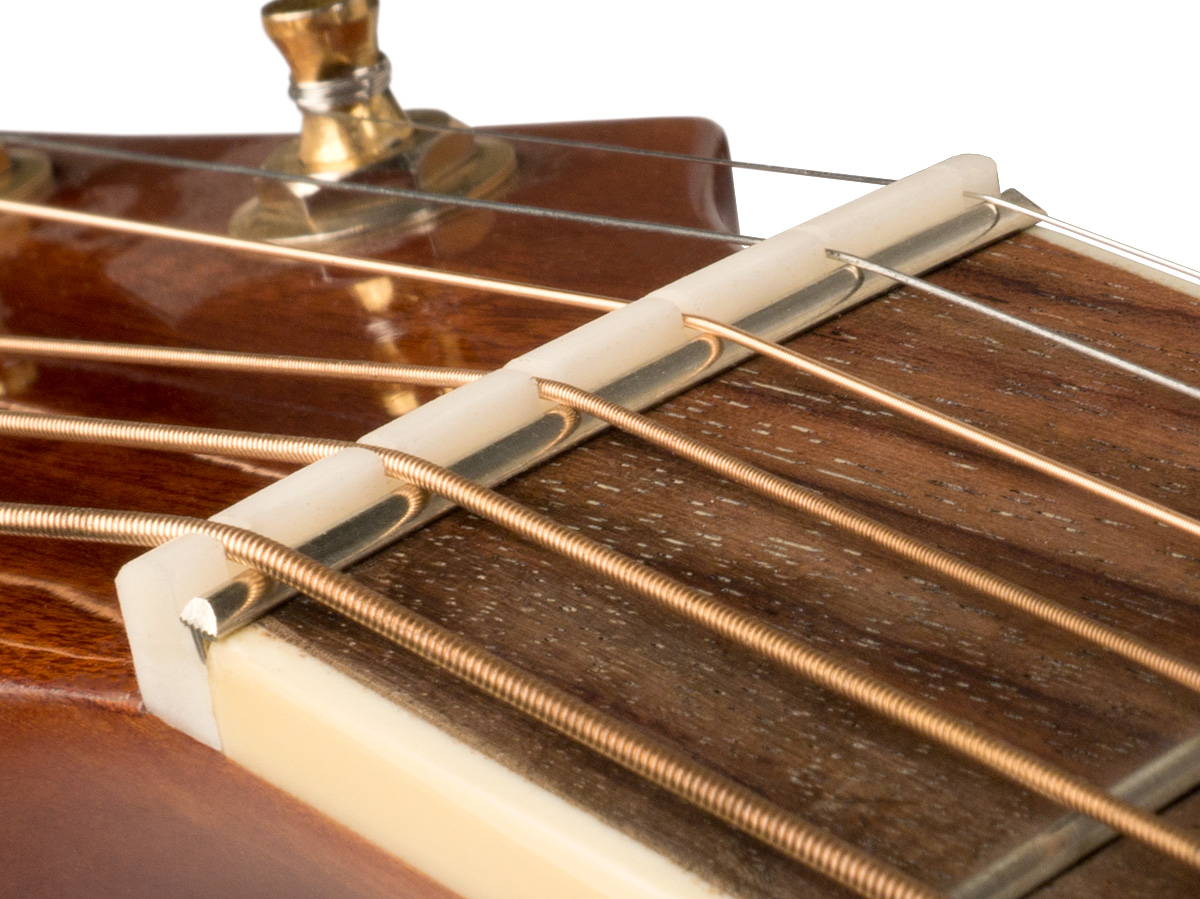
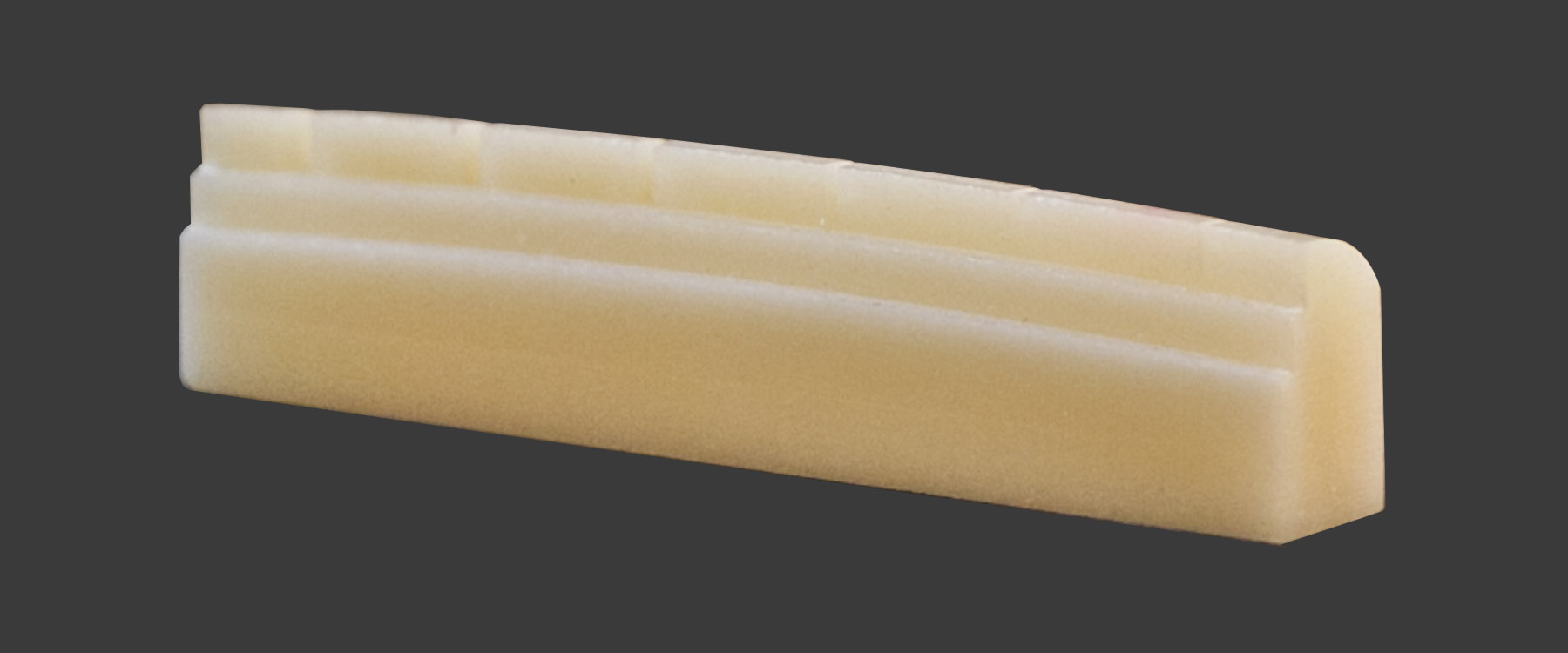
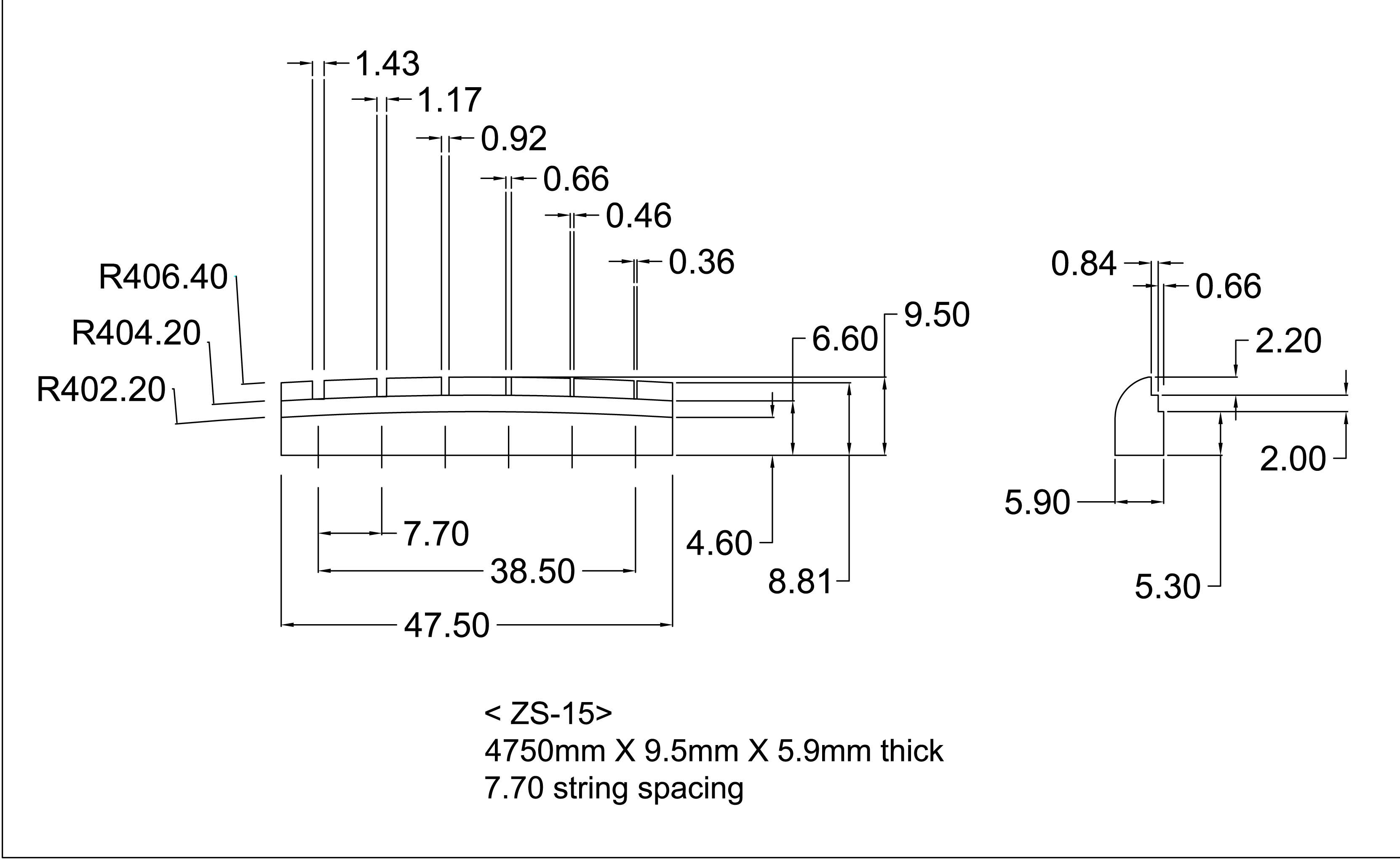
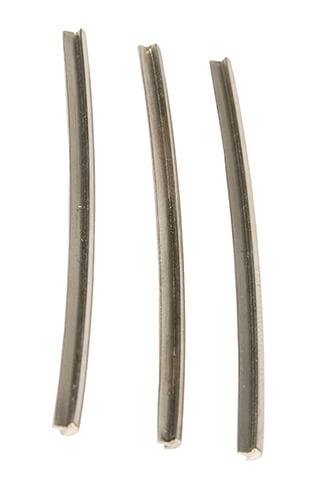
The Zero Glide Replacement Nut System borrows the "zero fret" concept to reduce string contact in the nut by up to 93%, increasing tuning stability, playability, and open string tone. It only takes a few minutes to install with absolutely no permanent alteration to your instrument. For Guitar.
Also available in Black Delrin.

Works as described but installation was a pain. I have a warmoth tele neck that I installed it to. I had to cut back the nut slot a little to fit the new bone nut and fret in place. I thought it would just drop in.. I wasn't anticipating that but my skills didn't let me down. I filed the nut and fret down on both sides a little, added some super glue and now it works great. i have a bigsby so tunning is a breeze now!
I put one on my Taylor 12 fret, it made a big improvement in string tone, tuning, and intonation. I'm now going to install them on all my guitars.
My circa 1997 American Standard Strat always had a problem with staying in tune after whammy bar use. I tried pencil graphite and different string sizes with not much luck. I put this nut on and a set of Gotoh locking tuners and now it seems to stay in tune very well.
The Zero Glide performs like the manufacturer claims it will. It took less than one hour to complete the installation and have the guitar playing. The nut I removed was cheap plastic and the thin wires had cut down into the nut to the point that there was severe fret buzz on the open strings. The Zero Glide cured that and has all of the strings at the same level. I used a disc sander to shape the nut to length and height in a few minutes. About five more minutes and the nut was polished. The installation looks good. I suggest a person view the manufacturer's installation video before doing the installation.
I m impressed with this. Easy to install. I m not a luthiar but I have refretted a few guitars and made some nuts and saddles. This is a pretty incredible system. I was going to cut a new nut for an acoustic guitar I just bought. I tested it and it was not sliding perfectly through the nut even though there was no ping while tuning. The way I test a nut is to strike a note then smack the string between the nut and the machine heads. behind the nut I put a tuner on the head stock so I can watch the note go up and come back. It simulates a good bend and you can watch the quality of the nut you have on the guitar. Most guitars will stick at about 6 to 10 cents above the tuned note unless you have a really well cut nut. At least the wound strings will....steel strings will usually drop back to the tuned note if the nut is decent . The nut I had on this guitar was pretty good....no pings while tuning yet it would still catch occasionally which effected tuning.